“All of the young people were really engaged... and seemed to really enjoy themselves.” The Main Themes from our Mental Health Manifesto Project from Jan- March 2025
A Thematic Analysis of Field
Notes from Jan-March 2025
Prepared by: Dr Michaela James Swansea University,
Jessica Hope Single Parents Wellbeing
Funded by The National Lottery Community Fund and in Partnership with Mental Health Foundation, Swansea University and Public Health Wales, the Mental Health Manifesto is led by Single ParentsWellbeing (SPW) CIC, based in Cardiff.
The project aims to engage with children and young people (10-24 years) from single parent households to co-design and deliver what they need to create positive pathways to a mentally healthy future. During the project, beneficiaries are given the opportunity to make new connections, have their voices heard and build positive foundations for their future.
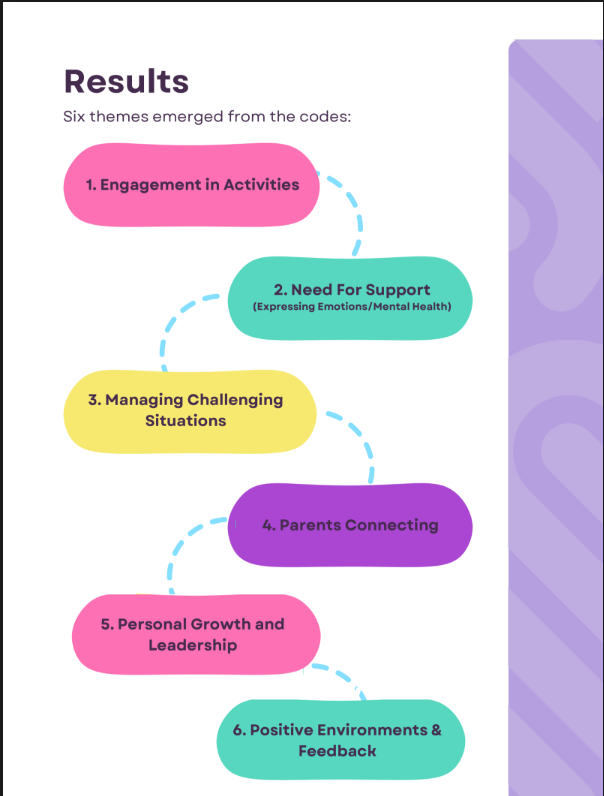
1. Engagement in Activities
The Mental Health Manifesto is providing strong evidence of meaningful engagement from children and young people across all sessions. Across a range of creative, physical, and discussion-based activities, such as guest speaker challenges, soap making, art workshops, and interactive sessions like graffiti or ninja warrior courses, young people consistently demonstrated active participation, enjoyment, and lots of confidence building opportunities. Notably, as a secondary outcome, many sessions also sparked spontaneous conversations about home life, aspirations, and challenges faced by young people living in single parent households. This points to the creation of safe, relaxed environments where natural dialogue can emerge.
“Stand out moments were seeing a wide age range enjoying different activities.” (Staff)
“All of the young people were really engaged in the soap making session and seemed to really enjoy themselves.” (Staff)
A recurring theme is the value of choice, creativity, and collaboration. Young people reported feeling more receptive and open when activities were hands-on, such as creating soaps, or when given options (like choosing between making Welsh cakes or pizzas).
“Using a creative activity can help the young people to be more receptive and contribute to discussions.” (Staff)
“The craft exercise giving them an opportunity to be busy with their hands whilst talking about sleep, school and 2 houses. Allowed them to be more open and relaxed, natural conversations emerged.” (Staff)
These moments of autonomy supported engagement and foster a sense of ownership, a critical factor for this cohort who may experience limited agency in other areas of life. These seemingly simple elements helped lower barriers and create shared experiences among participants, even across a wide age range.
Significantly, the project is reaching those who are often quiet or withdrawn. Several quotes describe how apprehensive or hesitant individuals began to relax, connect with peers, and take part whether by contributing to group games, speaking about their art, or even dancing with others. These moments highlight the importance of consistent, supportive facilitation and the effectiveness of peer-to-peer mentoring and support, which provides non judgmental, relatable encouragement.
In summary, the project is successfully creating spaces where young people engaged across a variety of activities. They are building connections and beginning to voice their ideas about what a mentally healthy future should look like for them. The breadth of participation and the deepening of involvement over time (see previous field note reports) are strong indicators of positive progress toward the project’s core aims.
2. Need For Support
The project continues to highlight the varied needs of young people from single parent households which could also be reflective of young people in the population. Through emotional check-ins, creativity, informal conversations, and support (e.g., through more professional pathways such as counsellors), participants have opened up about a wide range of emotional experiences. From sleep difficulties, exam stress, and anxiety to deeper personal struggles such as bereavement, identity, and trauma.
“One of the young people said that they have trouble sleeping. They said that they had 6 hours of sleep last night and that is good for them compared to usual.” (Staff)
A strength of the project is its ability to create environments where young people feel safe to express themselves. Many participants have used the sessions to explore their feelings, sometimes through direct discussion, which have opened up through accessible mediums like art, clay, emoji stickers, or metaphor (e.g., “knots don’t have to be a bad thing” when making macrame hangings). These creative tools have helped reduce the pressure to talk and allowed feelings to be shared visually, physically, or nonverbally, which is especially valuable for those with additional learning needs or communication differences.
The sessions have revealed high levels of tiredness, emotional overwhelm, and difficulty with regulation, particularly after school or following stressful life events. For some, simply having a low-pressure activity (such as biscuit decorating or playing with clay) noticeably improved their mood and energy. This underpins the importance of downtime, play, and small moments in supporting young people’s wellbeing.
“One of the C4Cs (currently not in school) attended and was on the brink of a panic attack, she was very tearful at the start and worked through these emotions with SB and her mum. Within 15 mins, she was fine (without mum) and socialising with the C4Cs on her table. She has particularly bonded with one older C4C who has been particularly accepting and welcoming to her.” (Staff)
“One young person mentioned that working with the clay was a good way to get their emotions out.” (Staff)
We also observed emerging trust and peer support within the group. Young people with lived experiences of anxiety or neurodivergence supported one another, with older participants who have attended the groups for longer, offering comfort and inclusion to new or more anxious members. Moments like bonding over shared difficulties with sleep, recognising emotions through sign language, or helping others regulate during a game of UNO, reflect a growing sense of community and compassion within the group.
Importantly, the project is surfacing hidden or unmet needs, from undiagnosed autism and misunderstood behaviours to experiences of bullying or emotional suppression. Parents and guardians are also increasingly engaging in these discussions. This positions the project as a vital space not only for young people but also as a bridge between families and wider systems of care and recognition.
Mental health-themed activities such as exploring the “inner critic,” and discussing sleep hygiene have been well received. They offer practical tools while normalising mental health literacy. These sessions have been part of shifting the narrative from individual problems to collective understanding and shared strategies.
The project is making progress in creating a trusted space where young people can feel heard, supported, and equipped with tools to understand and manage their emotions. The varied and honest contributions suggest that we are reaching those who are often missed or misunderstood by mainstream services. Going forward, maintaining flexibility, practice, and individualised approaches will be essential in deepening this progress.
3. Managing Challenging Situations
A key theme that can be seen throughout the project is managing challenging situations. Given the nature of the work, particularly in engaging with young people and parents, it’s inevitable that difficult situations will arise from time to time. The ability to respond effectively and manage these situations is very important. The team has consistently demonstrated how well they are able to adapt in these difficult situations, showing great flexibility which helps to produce positive outcomes. Their ability to adapt and respond not only helps to resolve issues but also creates an environment where everyone feels supported.
“A student arrived expecting to volunteer at the session due to a misunderstanding, she thought she could turn up to volunteer however I explained we would need to have an interview and a meeting and do some paperwork to get involved.” (Staff)
This theme highlights the complexities of supporting young people with a range of needs, particularly in group settings that bring together diverse experiences and personalities. The project continues to navigate these moments with sensitivity and adaptability, reflecting both progress and ongoing learning in creating inclusive, supportive environments. A number of young people demonstrated the need for space and autonomy when feeling overwhelmed.
“One of the young people asked if they could sit in the corner of the room away from the rest of the group to eat their biscuit because they don't like eating in front of other people.” (Staff)
“Perhaps the day was too long (10-3pm), a few YP said ‘I have no social battery left’ - there was a lot of social anxiety and by the time we got to the afternoon meeting, a few seemed tired/less engaged. We did another fun moving around game to get people feeling more energised which helped but it was a long day.” (Staff)
These requests and feedback were generally respected and accommodated with understanding, showing the team’s awareness of sensory and social needs. Staff offered individualised support, from sourcing gloves for sensory comfort to gently integrating quieter participants into group activities, signalling a responsive and child-centred approach. Social anxiety and discomfort in group settings were common, particularly in longer sessions or when new faces or environments were introduced. Some young people struggled with the pressure to socialise, openly sharing their anxieties about not knowing what to say or feeling like others were connecting more easily.
There were also several examples of proactive management of difficult interactions. When unkind comments or insensitive behaviour occurred, such as laughing at an image of a person with a disability, staff stepped in promptly to explain the impact and encourage reflection and kindness, by referring to the co-produced ground rules of the group.
Logistical or safeguarding challenges also arose, such as confusion over volunteer roles. While these instances created temporary challenges, they were resolved however, for future sessions, the importance of clear communication should be reinforced. Staff have remained flexible throughout the project and open to amending activities to suit interests or needs, this adaptive mindset supports the safety and emotional regulation of participants, many of whom are already navigating complex social and emotional challenges.
While challenges are inevitable in youth spaces, the project is building strong foundations of trust, responsiveness, and person-centered approaches. The team’s growing confidence in handling difficult dynamics in real time, alongside ongoing reflection and planning, speaks to meaningful progress.
4. Parents Connecting
Although a smaller theme, it offers a powerful insight into the wider impact of the project beyond its direct work with CYP. Parents have shown a desire to connect with one another, with some naturally gathering to share food, conversations, and even making plans to meet again outside of the sessions. In one example, a parent initially passing by the session became curious enough to return with their child and sign up for future activities, indicating that the welcoming environment is visible and inviting even from the outside. This kind of organic engagement illustrates the project’s potential wider reach.
Providing a dedicated space for parents during sessions is also effective. It gave adults the opportunity to form relationships and build trust with each other while their children were similarly supported. The theme suggests that the project is beginning to act as a connector, not only for young people but for their families too. These early signs of parent-to-parent connection suggest a growing sense of collective ownership and community, reinforcing the need for Thrive in Swansea. Thrive is dedicated to improving the mental health, confidence, and self-esteem of single parents through meaningful volunteer opportunities. The initiative includes comprehensive training and workshops designed to enhance the knowledge and skills of our volunteers. This supports the project's long-term vision of inclusive, relationship-centered spaces.
5. Personal Growth and Leadership
The theme of Personal Growth and Leadership is reflected across multiple interactions and moments from recent sessions with it being a theme in previous reports. The emergence of leadership behaviours, such as a quiet participant leading a team activity, or a confident regular going out of their way to include a new attendee, signals a positive shift in relationships. Suggesting that the environment created is one where young people feel safe and empowered to take initiative and support others.
“One of the boys who seemed very shy to begin showed excellent leadership qualities in the human knot activity, which was really lovely to see.” (Staff)
There is clear evidence of increasing emotional openness, with young people sharing personal challenges such as family life, sleep difficulties, or worries about school, often for the first time.
“Some really intense conversations happened this evening. One young person admitted to self medicating due to family circumstances they said at end of session ‘Thank you for listening to me’ we cut out the word Believe and they then added this to their artwork saying ‘I need to believe in myself”. (Staff)
“I worry about exams and have some drama with friends at the moment which is making me nervous about going to school.” (CYP)
The willingness to share in both group and one-to-one contexts speaks to the strength of trust being built between CYP and facilitators. The presence of a male staff member also emerged as an important factor in enabling some boys, who are often less vocal, to engage more deeply. Crucially, the sessions are now fostering peer leadership in subtle but powerful ways, whether through initiating inclusive gestures, checking in on absent friends, or creating space for others to feel seen and supported. These micro-moments, such as shared conversations over pizza or helping a peer feel welcome, represent the kind of everyday leadership that builds strong, compassionate communities.
“They heard one child was unwell and couldn't join so a group of them made a video message (of get well and ‘we miss you’) and sent it to this yp [young person]!” (Staff)
Overall, the project is progressing from early engagement into deeper relationship-building, emotional growth, and emerging leadership among participants. Young people are not only engaging with the content but are beginning to shape the culture of the group themselves, marking an important milestone in the project's journey towards co-produced
Lessons Learned
The learning captured across recent sessions provides valuable insight into how the project can continue to evolve to best support the needs of CYP, families, and staff. While the feedback remains very positive, several key areas for development and refinement have emerged.
A recurring theme is the need for more time and flexibility in session planning. Creative activities can take longer than the allocated time, especially when participants needed additional support or became engaged in more detailed work. Similarly, allowing sufficient time for outdoor play was shown to improve engagement and energy levels, and should be consistently factored into future sessions. Adjusting session lengths or building in transition time between structured and unstructured activities could better support the natural rhythms of participation. On a similar note, session timing continues to be an area for adjustment. Some young people arrived late due to confusion over timings or external factors like school runs and traffic. Slightly later starts, shorter midweek sessions, and avoiding date clashes with other events, may all support improved attendance and energy levels.
The layout and feel of the physical environment strongly influenced engagement. In more open or high-traffic venues, young people were more likely to dip in and out of activities, making it harder to sustain group cohesion. Suggestions such as capping numbers in certain venues, using single large tables to encourage interaction, and ensuring quiet spaces are available were all highlighted as ways to improve comfort and connection. Gloves, tools, and other adaptative resources also played an important role in helping young people engage on their own terms.
Clear and accessible communication in the lead up to events remains essential. A few families struggled to find venues due to postcode issues, while others missed key messages about session times or requirements (e.g., bringing trainers). Video directions, pictures of the building or staff, text reminders, and follow-up calls were all noted as helpful strategies and should become standard practice. Similarly, for young people with additional learning needs (ALN) or those new to the project, having visual aids (like photo books or printed examples) was especially effective in supporting understanding and easing anxiety.
Overall, these lessons show a project that is responsive, reflective, and committed to continuous improvement. The team is clearly learning from each session, the field notes, ongoing discussion and reporting and using these insights to strengthen the project.
Recommendations
These findings hold valuable implications for young people from single parent households and suggest potential strategies and points to consider for the future and for the development of a mental health manifesto.
The key recommendations from these field notes are:
1.Ensure that each session allows enough time for both structured activities and unstructured social interaction or movement breaks. Where possible extend sessions slightly or prioritise fewer activities per session, include optional breakout or outdoor time as a regular component and offer alternative ways to engage with activities (e.g. observing, doing it later, using prompts).
2. Make pre-event communication clearer and across different formats to support both families and young people. For example, sending reminders by text and/or WhatsApp closer to the session date, using simple videos and visuals to explain locations and expectations and following up unclear RSVPs with a phone call, especially for new or potentially vulnerable attendees.
3. Ensure sessions are well-staffed and roles are clearly defined. Allow time for staff setup, especially in new venues and explore further training or role definition for YAAs, parents or peer leaders to step in where capacity is stretched. Share short pre session briefings focused on the session’s wellbeing or confidence-building goals.
4. Consider group size, layout, and flow carefully depending on the venue. Use a single large table (when possible) to encourage group cohesion and ease of socialising and choose venues that support both structured and freeform activity, and that are easily located and accessible.
Find out more about our young person’s project and how to get involved here.