What Does My Family Look Like? The Need For Identity in Single Parent Families
When we talk about family, we often picture a nuclear image: two parents, a couple of children, a shared home. But for many young people, that image doesn’t reflect their reality.
That’s what inspired the “What Does Your Family Look Like?” pilot project. At networking events SPW staff noticed how uncomfortable some young people felt when conversations turned to their home life. They would hesitate, give vague answers, or completely avoid the topic, an indication that even now, in 2025, there’s still stigma around family setups that fall outside the traditional box.
It was also noted that single parents that we were meeting and children and young people living in single parent households were struggling to identify as from a single parent household. They may have left home as a young person, their parents may have remarried and be in a blended family, or they may even see that because they are a bereaved single parent and don’t see this as a choice.
This project aimed to flip that experience on its head by creating a space where all family types are celebrated.
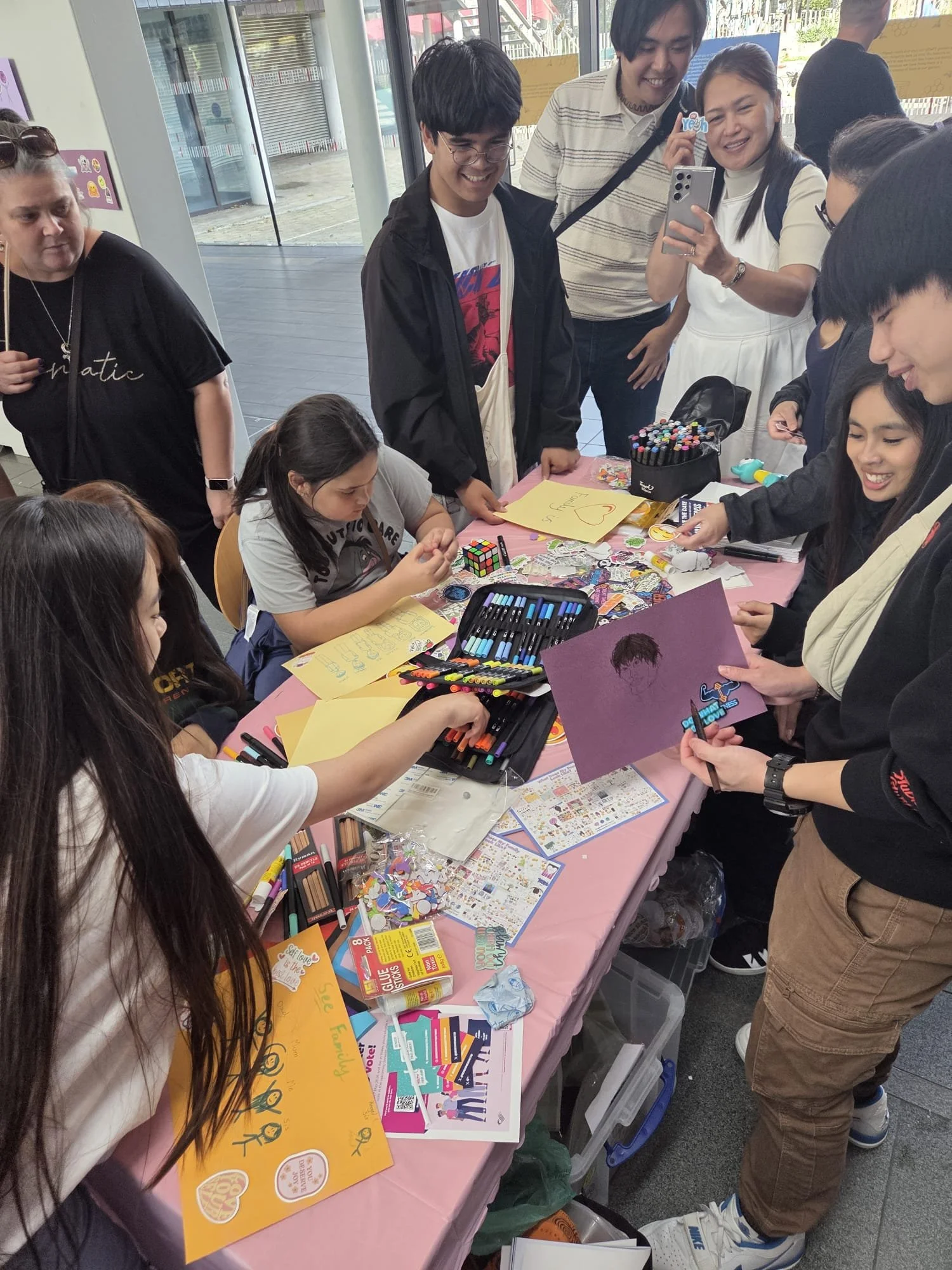
Photo from Wonderfest Swansea, where the music and art exhibition was unveiled.
Why Identity Matters in Single Parent Families
Identity is more than just knowing who you are; it’s about feeling seen and valued for the life you live. For children and young people in single parent households, their family identity is deeply intertwined with their self esteem, sense of belonging, and mental wellbeing.
Yet, the identity of single parent families is often overlooked or oversimplified. This pilot project revealed just how much variety exists within what we think of as “single parent families”—and why understanding these differences matters.
From the 103 young people who completed their artwork:
27 came from solo parent households
18 were from blended families
9 were navigating co-parenting arrangements
5 were being raised by grandparents
3 were living in foster care
41 were from households where parents are still together
Each of these scenarios presents different challenges, emotions, and strengths, and each deserves its own space in conversations around identity, support, and wellbeing.
There are some single parent types missing from the above aswell, you can read more about different types of single parents here.
Meeting Young People Where They Are
What made this project so impactful was its thoughtful structure. Sessions took place in youth centres and familiar spaces, designed to feel the opposite of school: relaxed, creative, safe, and youth led.
Rather than asking direct, awkward questions about family life, young people were invited to draw, paint, collage, or write lyrics about what their families looked like to them. Family could mean anything: parents, grandparents, siblings, friends, pets, carers. There were no rules, just the safe space to explore.
The result? A series of honest, moving artworks and a collaborative music track that encapsulated the diversity, creativity, and emotional complexity of modern family life.
“With about 103 young people taking part in the project, including 60 young people’s artwork being displayed and 52 young people writing lyrics for the music track. It was great to see what everyone’s family looks like and what family means to them. ”
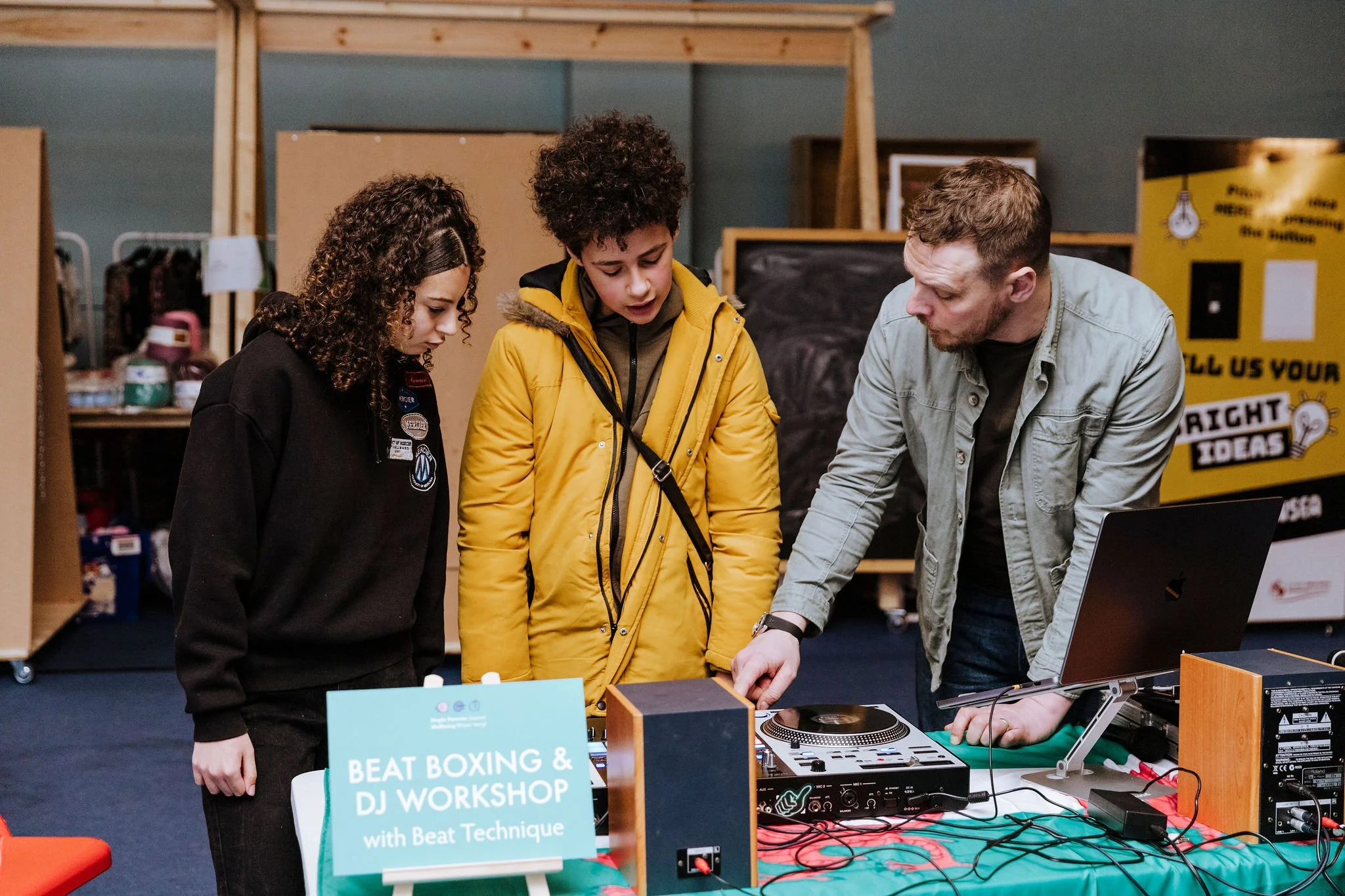
Dean Yhnell from Beat Technique playing an important part to bringing lyrics to life.
The Differences Within Single Parent Families—and Why They Matter
One of the project’s most powerful outcomes was the realisation that not all single parent families are the same. Some young people move between two homes, others are raised by one parent full time. Some have experienced loss, while others are adjusting to new partners, siblings, or guardians. Some feel safe and supported, others face instability.
This diversity means that a one-size-fits-all approach to support simply doesn’t work. Young people from different family structures face different barriers:
Solo parent households might face financial pressures or limited adult support.
Blended families might navigate complicated emotional dynamics and shifting roles.
Improve care or kinship care brings questions of identity, belonging, and permanence.
Co-parenting/ linear parenting arrangements can offer stability, but also bring logistical or emotional challenges.
By allowing young people to define their own family identities, we give them the tools to understand and advocate for what they need, without shame or fear of judgment.
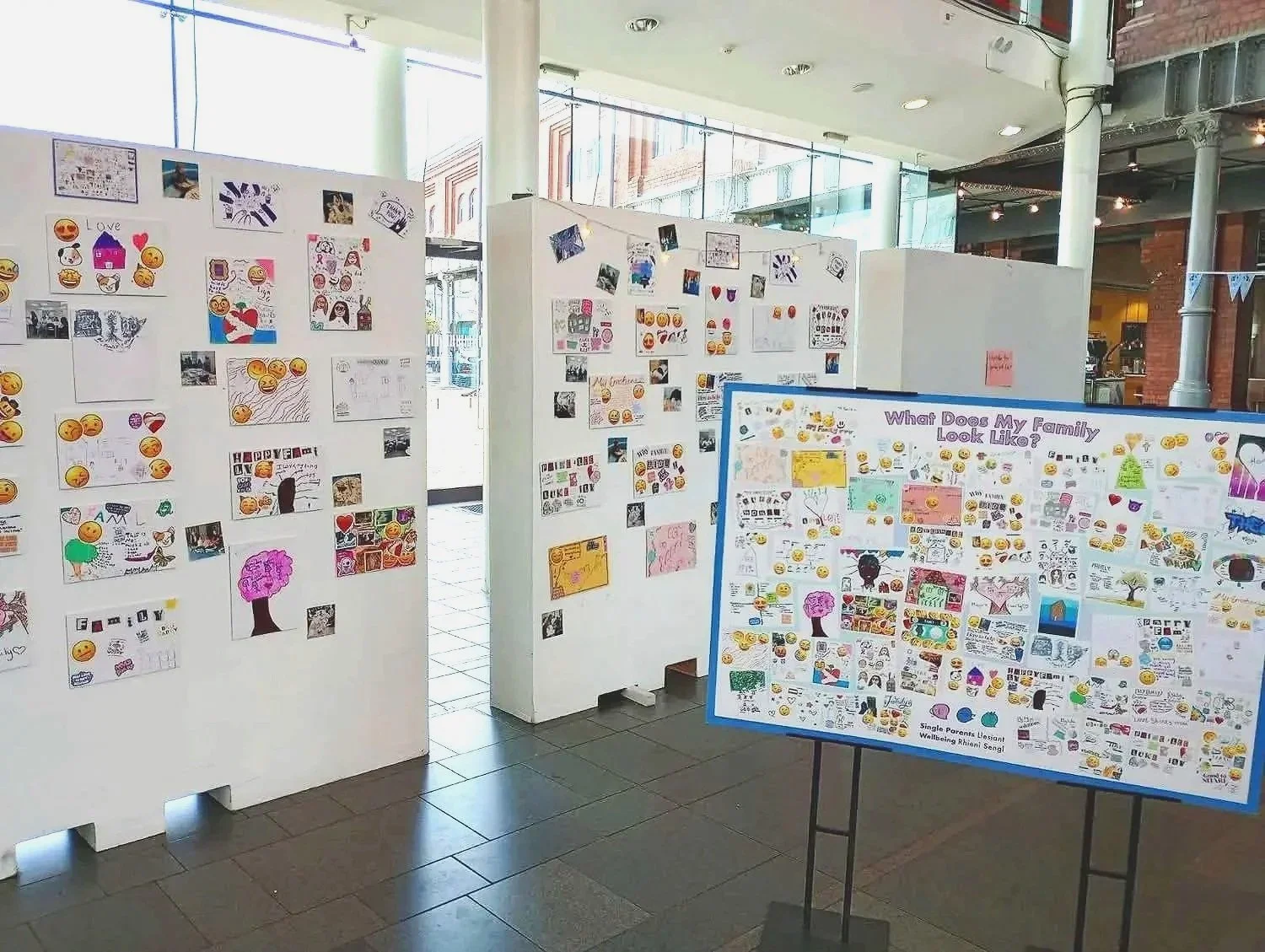
Art exhibition at Wonderfest, Swansea.
More Than Just a Project: A Chance for Change
This pilot project didn’t just produce powerful artwork and music, it built connections, confidence, and community. Young people opened up, supported each other, and started conversations with youth workers, carers, and even their own peers. For some, it was the first time they’d felt truly seen.
It also highlighted a clear appetite for more. Seven youth provisions took part, with four more eager to join in the future. The creative format and music production element proved to be a powerful hook, and many young people asked to stay involved beyond their initial sessions.
But beyond the creativity, the message was clear: young people want to talk about their families, they just need the right space to do it.
What’s Next? Scaling Up, Speaking Out
The success of the pilot has led to an ambitious next phase: a Swansea-wide rollout with plans to eventually take the project pan-Wales. The expanded vision includes:
Music and lyric workshops in every youth provision
A documentary VT filmed by and for young people
A published book of artwork, stories, and wellbeing tools
A public exhibition at the Senedd showcasing all creative outcomes
Systemic change in schools and workplaces around the difficulties and barriers of being in a single parent household
The goal is not just to create art, but to change conversations in schools, youth services, and society about what family really looks like today.
By involving industry professionals, university partners, and young people at every stage, this project is about more than just expression, it’s about empowerment.
Why It Matters
At its core, What Does Your Family Look Like? is a project about belonging. When we validate all types of families, we tell young people that they matter, no matter what their home life looks like.
Understanding the differences in single parent families, and the barriers each type faces, helps professionals, educators, and peers provide more meaningful support. It also helps young people feel less alone, knowing that their story is one of many, and that their voice is valued.
We need to keep having these conversations.
We need to make sure young people feel safe expressing their truth.
We need to recognise that all families count and come with a diverse range of positives and challenges.
And we need to make sure that no young person ever again feels uncomfortable answering the question: “What does your family look like?”