“My favourite thing about being a C4C is all the people that can support you”. The Main Themes from our Mental Health Manifesto Project from April - June 2025
A Thematic Analysis of Field
Notes from April - June 2025
Prepared by: Dr Michaela James Swansea University,
Nicole Burchett Single Parents Wellbeing
Funded by The National Lottery Community Fund and in Partnership with Mental Health Foundation, Swansea University and Public Health Wales, the Mental Health Manifesto is led by Single ParentsWellbeing (SPW) CIC, based in Cardiff.
The project aims to engage with children and young people (10-24 years) from single parent households to co-design and deliver what they need to create positive pathways to a mentally healthy future. During the project, beneficiaries are given the opportunity to make new connections, have their voices heard and build positive foundations for their future.
Every three months we receive a report from Swansea University highlighting the themes that have come from the fieldnotes that staff write after every event. The main themes found from April to June are below.
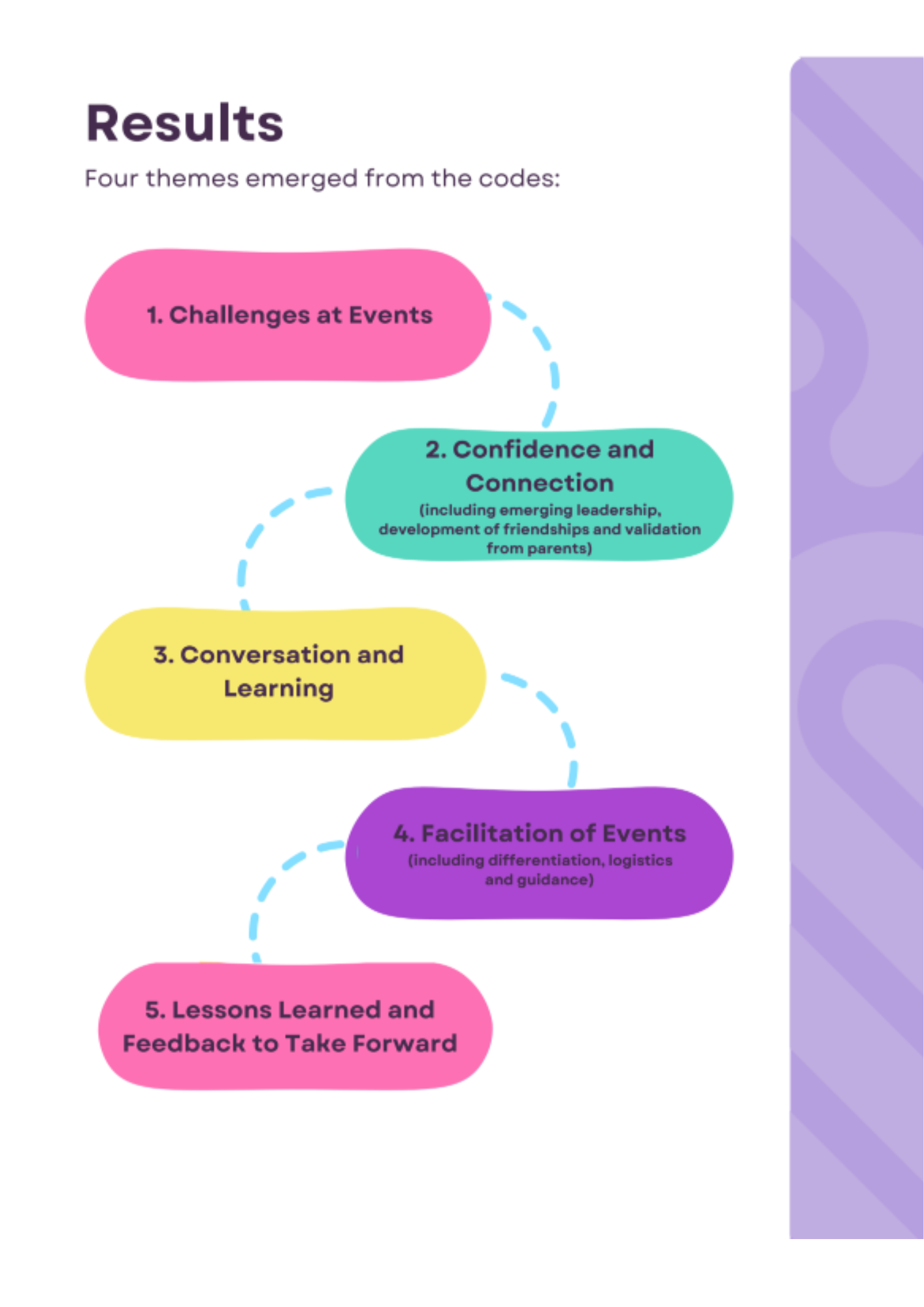
1. Challenges at Events
While many events were positive and engaging, they were not without their difficulties. This has been a recurring theme in the last two monthly field note reports. Previous challenges have been in the form of communication and supporting a wide range of needs and expectations. This period is no different. The most consistent challenges related to managing group dynamics, engagement levels, and practical disruptions. The field notes suggest that these are not isolated incidents, but recurring patterns. Establishing and co-creating ground rules with young people at the start of each series of sessions (e.g., minimising phone use) could help this.
“One young person was on their phone and did not engage as well.” (SPW staff)
Logistical challenges have also been recurring, though the team has shown adaptability in addressing them. Challenges are not only acknowledged but often used as opportunities to develop skills and strengthen the group’s capacity for future collaboration. While challenges are an inevitable part of delivering participatory projects, the field notes show that the team approaches them with good mindset.
2. Confidence and Connection
TheAcross this reporting period, a notable strength of the Mental Health Manifesto project has been its ability to foster both individual confidence and meaningful connections among young people. One of the clearest outcomes under the Confidence and Connection theme has been the emergence of leadership among young people. While leadership in this context is often subtle, it can be seen in moments where individuals take initiative or step into different roles that they have not done in the past.
“Whilst this was happening, two young people started coproducing the presentation for the young people volunteer information evening. The remaining three started creating some leaflets for the same information evening." (SPW Staff)
The nature of the activities and check-ins facilitated by the project can help break down barriers. Connection and conversation can enhance the group dynamic in future sessions. Young people who feel socially connected are more likely to return, contribute, and support one another’s participation. This creates a positive feedback loop: stronger relationships lead to better engagement, which in turn deepens trust and the willingness to share openly about mental health experiences and perspectives.
“A key highlight of the event was the high level of engagement from attendees, with most people taking part in nearly all the activities on offer.” (SPW staff)
3. Conversation and Learning
The Mental Health Manifesto project has proven to be a successful space for encouraging conversation, knowledge generation and sharing as well as learning. It has been evident that young people feel safe, included and welcome and able conversations often extend into wider wellbeing and community issues.
“The rights-based activity sparked conversations about what resonates most to the group and how these rights relate to C4C’s mission, demonstrating growing awareness and critical thinking.” (SPW staff)
The project has been able to offer sessions or engaged in topics that have either cropped up organically or have been directly needed by the group. This reporting period saw conversations around trans identity and panic attacks which have given the young people lots of space to navigate these topics, learn and grow. Field notes throughout the project have revealed that young people feel able to ask questions, share personal insights, and challenge ideas, which indicates that the project has succeeded in creating psychologically safe spaces.
4. Facilitation of Events
The Facilitation of Events theme captures how the style, adaptability, and presence of the project team shapes young people’s experiences and influences the success of each session. Across the field notes, facilitation has not simply about delivering planned activities, it has been about making space and balancing needs that arise when diverse young people come together. Facilitators often adapted activities to accommodate different ages/abilities ensuring that no one felt excluded.
“The variety of activities offered ensured there was something for everyone, catering to different interests and needs; whether creative, physical, sensory, or social.” (SPW staff)
The field notes offer numerous examples of facilitation done exceptionally well, where the combination of preparation, adaptability, and relational skills brought sessions to life. These moments show how skilled facilitation can transform an activity from a set of planned steps into an empowering experience.
Lessons learned and feedback to take forward.
Feedback from participants, parents, and facilitators provided valuable insights for shaping future sessions and events. Young people expressed enthusiasm for activities and made specific requests, including pizza evenings to co-design the future of C4C, additional social meet-ups, and even the possibility of a C4C pet.
Themes of inclusivity and representation were strong, with suggestions from staff through observations for greater awareness and visibility of trans people, including website content and dedicated discussions. Emotional wellbeing also featured prominently, with identified needs for conversations around anxiety, managing life between two homes, and ensuring provision is available where youth demand is high.
Recommendations:
The key recommendations from these field notes are:
1. Continue proactive event management and participant preparation: To minimise disruptions and maximise engagement, ground rules and buffer time for late arrivals may help.
2. Provide ongoing leadership opportunities for young people: Confidence and connection were greatly enhanced when participants had visible, valued roles in the sessions. Expand structured/unstructured peer leadership opportunities where possible.
3. Embed earning in a safe, inclusive environment: Conversation and learning thrived when participants felt safe to ask questions and explore ideas. Facilitation should continue to model openness, encourage inquiry, and create space for peer-to-peer knowledge sharing.
4. Tailor facilitation approaches to diverse needs and learning styles: Differentiation was a key strength and should be deepened in the next delivery phase. Maintain flexible activity formats, offer age- and ability-appropriate adaptations, and share clear guidance while leaving space for participant-led directions.
5. Continue responsive, co-produced programming: Build in regular feedback loops during delivery (not just at the end), ensure provision is age-sensitive, and continue to act on requests for representation (e.g., trans visibility, topics like anxiety or split-home living).
Find out more about our young person’s project and how to get involved here.